.png)
5 must-try activities for a corporate event
When you think of corporate event activities, you often imagine the usual classics: escape rooms, quizzes, blind tests, or even field days. Yet, some much simpler experiences can sometimes create more lasting memories and stronger bonds between participants.
Today, more and more companies are looking to organize corporate events that break away from standard formats and allow teams to experience something more authentic, driven by personal connections, stories, and shared moments.
↪️ In this article, you will discover the different types of corporate events, understand why activities are so important, and explore 5 must-try ideas for creating truly memorable moments.
The different types of corporate events
There is no single format for a professional event. Depending on your goals and challenges, several options are available.
- The corporate seminar : it brings teams together for workshops, strategic brainstorming, or team-building moments.
- Team building : its main objective is to strengthen team cohesion through various activities.
- The onboarding day : it facilitates the arrival of new employees and encourages interaction among team members.
- Theonboarding : this format helps guide new hires as they settle into their roles and discover the company culture.
- The corporate party : it offers a more relaxed setting to celebrate a success, thank the teams, or strengthen bonds between colleagues.
- The client event it helps build partner loyalty and creates special moments with clients.
- The residential seminar : spanning several days, it combines work, relaxation, and team-building activities.
Regardless of the format chosen, the activities offered often play a much more significant role than one might think.
Why do activities play a much more important role than we think?
We have all attended perfectly organized events. The venue was pleasant, the cocktail hour was a success, and the program was well-structured, yet a few weeks later, there wasn't much left in our memory.
Conversely, some experiences continue to resonate long after they end. An unexpected encounter, a conversation that runs long, or an activity led by a passionate guide are sometimes enough to create a much stronger memory than a standard activity.✨
It is precisely for this reason that the choice of activities should never be considered a mere detail in theorganization of a B2B event. When chosen well, they help set the tone, encourage interaction, and give a true identity to the time spent together.
Because beyond mere entertainment, activities are often what allow participants to connect in a different way. They create shared memories, facilitate communication between teams, and sometimes offer colleagues who work together all year the chance to see each other in a new light.
They can also serve very different objectives:
- Strengthen team cohesion.
- Encourage interaction between different departments.
- Welcome new employees.
- Celebrate a collective achievement.
- Thank clients or partners.
- Create a more relaxed atmosphere outside the usual setting.
Contrary to what you might think, it’s not always the most impressive activities that leave the biggest mark. Often, it’s the ones that foster connection, conversation, and shared emotion that create the most lasting memories. ✨
5 corporate event activities you absolutely have to try
There are hundreds ofcorporate event activity ideas. Here are 5 original experiences that break away from the usual formats:
1) Meet a local artisan or producer
At first glance, this activity might seem more low-key than an escape room or a flashy event. Yet, it is arguably one of the best ways to spark genuine interaction between participants.
Why? Because it’s built on a human connection. Behind every artisan, producer, guide, or enthusiast is a story, a personality, and a unique way of sharing their craft. And it’s often that authenticity that makes the moment memorable. 🧠
These experiences also allow you to slow down. You take the time to listen, discover a new skill, and ask questions. Conversations happen naturally, without the need to force games or challenges on the participants.
It’s also a great way to move away from the formats everyone has already seen. Today, many companies are looking to offer something beyond a standard corporate event activity. They want to provide experiences that are more authentic, human, and original.
✨ Weeks later, employees rarely remember the exact schedule of a day. However, they often remember the person they met and the story they were told.
2) Host a tasting with a winemaker or a wine enthusiast
If there’s one activity that works particularly well for a company retreat or a corporate evening event, this is it. Contrary to what you might expect, the value isn't just in the products being tasted. What makes the experience interesting is everything surrounding it: the anecdotes, the background of the person leading the session, local traditions, and the natural flow of conversation between participants.
Because behind a bottle of wine, a specialty coffee, a craft beer, or a local cheese, there is often a story. And it’s those stories that bring the experience to life! 🍷
It is also a particularly accessible activity. You don't need to be an expert to enjoy the moment. Everyone can participate at their own pace, ask questions, discover new flavors, or simply soak up the atmosphere. No one is put in competition, and everyone is free to experience it however they wish.
Another advantage: this type of format easily adapts to many professional events. It fits just as well during a cocktail party, a corporate evening, or as part of a longer seminar. Above all, a tasting has the rare ability to bring very different profiles together around the same activity. You don't need to be a connoisseur or particularly comfortable with group activities. Everyone participates as they wish, making it an option that is as friendly as it is accessible.
3) Discovering a city differently with a local guide
We often tend to think that a city tour doesn't really have a place in a corporate event. Yet, it is probably one of the most underrated activities. Because it's not just about walking the streets or rattling off historical anecdotes. The real value lies elsewhere. Discovering a city with a local guideis above all about taking the time to see it through the eyes of someone who loves it, lives it, and knows how to share its little details.
Their favorite spots. Their personal stories. Their hidden gems. Their perspective on the neighborhood or the locals. These are details you won't find in guidebooks or on Google. And that is precisely what makes the experience so much more lively and dynamic!
Another advantage: this type of activity is particularly inclusive. Unlike some more competitive activities, no one needs to perform or step out of their comfort zone. Everyone participates at their own pace, which allows conversations to flow much more naturally between participants.
It is also an excellent way to discover a destination differently during a corporate seminar. Because even when you already know a city, you often rediscover it from a completely different angle. And this applies just as much to Paris, Brussels, or Bordeaux as it does to lesser-known destinations.
Finally, this type of experience offers another advantage: it integrates easily into many formats. It can serve as a common thread throughout a team day, a break between work sessions, or even a quieter activity during a residential seminar.
🌍 Our tip: opt for small group tours. Interactions are more spontaneous, and guides can more easily adapt to the participants' interests.
4) Take part in a cooking workshop led by a chef
If there is one activity that everyone agrees on for a corporate event, this is often it. And it’s no coincidence.
Cooking has a certain universal appeal. You don't need to be a master chef or have taken cooking classes before to participate. Everyone can find their place, learn at their own pace, and enjoy the experience without any pressure.
This is precisely why cooking workshops are so popular with companies today. Unlike more competitive activities, they naturally foster cooperation and mutual support. You prepare food together, swap tips, divide up tasks, and, without even realizing it, learn to work differently with your colleagues. 🍽️
Another interesting point: this type of format easily brings together very different personalities. Extroverts naturally find their place, while more reserved individuals can participate without needing to take center stage. There are no winners, no losers, and no competitive spirit. And that is exactly what makes the atmosphere more relaxed.
Cooking workshops also have the advantage of being suitable for many occasions. They fit easily into a corporate seminar, a team evening, a client event, or even a simple team-building day.
Some formats allow you to prepare a full meal, while others are more focused on pastry, local specialties, or exploring international cuisines.
Finally, this type of experience offers another advantage: it easily builds bridges between participants. You might discover that a colleague is passionate about Italian cuisine, that another bakes their own bread, or that someone you rarely talk to on a daily basis actually shares the same tastes as you.
These discoveries may seem trivial, but they often help to strengthen bonds within the team. It is undoubtedly for all these reasons that cooking workshops continue to appeal to so many companies.
They bring people together, put them at ease, and create a natural atmosphere, without ever feeling like a forced activity . Plus, there is something particularly satisfying about sharing what you have just prepared together. The meal then becomes the natural extension of the activity, allowing the moment to last in a much more convivial setting.
🌍 Good to know: more and more companies are now favoring workshops led by independent chefs or enthusiasts rather than overly standardized formats. The experience is often more authentic and personalized.
5) Enjoy an outdoor experience to break away from the routine
Spending days caught up in meetings, calls, screens, and notifications is a daily reality for many teams. So, when a corporate event offers a chance to step back and change environments, the benefits are felt almost immediately.
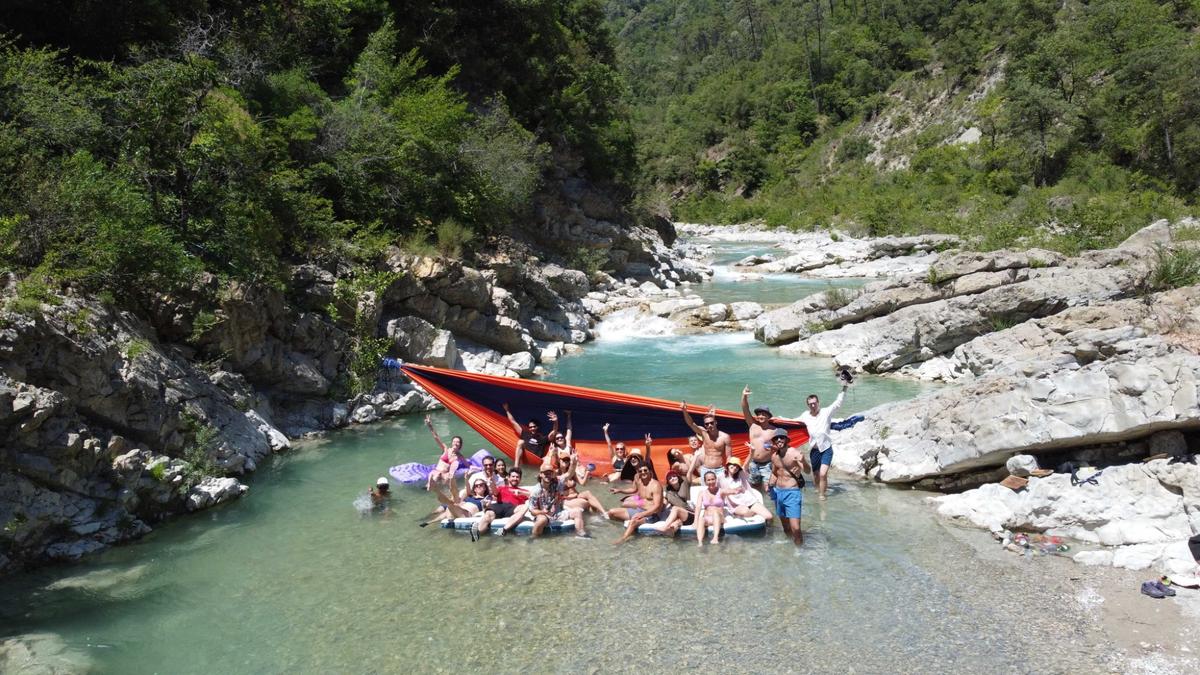
And it doesn't necessarily meanorganizing an extreme activity or taking on athletic challenges. Quite the opposite. Today, more and more companies are looking for simpler formats that primarily allow participants to catch their breath and reconnect in a different setting: a hike with an enthusiastic guide, a kayaking trip, a bike ride, discovering local wildlife, or even an activity centered around natural heritage are perfect ways to create that much-needed break. 🌿
Because the environment we are in influences our interactions far more than we realize. By leaving the office, meeting rooms, or seminar hotels behind, conversations become more natural. We take more time, mingle more easily, and certain hierarchical barriers even tend to fade away for a few hours.
Another advantage: these experiences are suitable for a wide range of profiles. Contrary to popular belief, outdoor activities are not just for the most athletic. Today, there is a multitude of accessible formats that prioritize discovery and the joy of sharing a moment together over physical performance.
It is also an excellent way to slow down the pace. In a world where everything is moving faster and faster, taking a few hours to disconnect from the daily grind is becoming almost a luxury. And that is precisely what many teams are looking for today.
These moments also provide a fresh perspective on a region. You discover landscapes, traditions, or local expertise that you probably would never have taken the time to explore otherwise.
And ultimately, this type of experience serves as a simple reminder: you don't always need to do a lot to create a successful event. Sometimes, changing your environment and taking the time to breathe is enough to make all the difference.
🌍 Good to know: outdoor activities are increasingly popular with companies looking to integrate a more responsible and local dimension into their B2B events. They often help highlight a region while offering participants a more relaxed and authentic experience.
➡️ And if you're looking for more ideas for your next corporate event, you can also discover the experiences offered by MeetPeople. The platform allows you to explore over 180 experiences throughout France and easily filter by:
- The city or region you are looking for.
- The desired experience category.
- The themes you are interested in (nature, gastronomy, wine and spirits, sports, music, nightlife, etc.).
This makes it easier to find an activity that truly matches your team, your goals, and your event format. ✨
How do you choose the right activities for your corporate event?
Before choosing team building activities or thinking about entertainment, it is often helpful to go back to a much simpler question: what kind of experience do you want to provide for your team?
Start with your goals rather than the activity itself
When it comes toorganizing a corporate event, many people start by asking themselves which activities to choose. There is no shortage of ideas, yet the right question isn't necessarily "What are we going to do?", but rather "Why are we organizing this event?".
Because a company retreat, a corporate party, or a team building day do not always have the same objectives. Some teams primarily want to strengthen cohesion, while others want to welcome new employees, thank clients, or work on a strategic project. Naturally, not all activities address the same needs.
For example:
- Strengthening team cohesion does not necessarily require challenges or competitive games.
- Encouraging interaction between different departments often requires more social formats.
- Rewarding employees generally calls for more memorable experiences.
- Welcoming new hires requires activities that are accessible to everyone.
- Organizing a client event requires a different level of customization.
This is actually a common mistake: choosing corporate event entertainment just because it’s trendy or worked well elsewhere, without considering whether it truly aligns with the atmosphere you want to create.
🌍 Our advice: before you even start looking for original team buildingideas, take a few minutes to define what you want participants to take away from the day. Your choices will then be much simpler and more cohesive.
Consider the team's personalities and preferences
It’s easy to forget that a team is never made up of identical people. Some employees love high-energy activities and group challenges. Others prefer calmer formats or experiences that allow more room for conversation. There are also those who enjoy being the center of attention, and those who feel more comfortable in smaller groups. And that is perfectly normal.
Trying to please everyone is impossible. However, it is entirely possible to offer sufficiently inclusive activities so that everyone can experience the moment in their own way. A few factors are worth keeping in mind:
- The participants' energy levels.
- Introverted versus extroverted profiles.
- Any potential dietary restrictions.
- Individual physical capabilities.
- The team's shared interests.
- The age or tenure of the employees.
- The level of closeness between participants.
An activity doesn't need to be extraordinary to be successful; it primarily needs to allow everyone to find their place. This is also why more human-centric and authentic formats are increasingly appealing to companies today. They offer participants more freedom and avoid making anyone feel uncomfortable.
Because ultimately, a good activity isn't one that appeals to just a few people. It’s one in which the majority of participants feel naturally engaged.
Look for moments that participants will truly remember
For a long time, many companies believed that a successful event had to be packed: multiple activities, a busy schedule, non-stop entertainment, and minute-by-minute timing. However, that is not necessarily what teams are looking for today. Many companies are now looking to offer more authentic experiences, more aligned with their values, and above all, more enjoyable for the participants.
Meeting a passionate artisan, a walk with a local guide, a cooking workshop, or even a tasting can sometimes have much more impact than a succession of activities without a real common thread.
A good indicator is actually quite simple: a few days after the event, are the teams still talking about it naturally? Do certain anecdotes come up in conversation? Have new bonds formed between colleagues who didn't know each other well before? If the answer is yes, then the activity has likely fulfilled its purpose. ✔️
Ultimately, the goal is not to fill every minute of the schedule. It is primarily about creating favorable conditions for employees to enjoy being together and to want to continue their conversations long after the event has ended.
Conclusion
Organizing a corporate event is not just about filling a schedule or finding an original activity. The main goal is to create conditions that foster interaction and shared memories.
After all, the most memorable experiences are almost never the most spectacular; they are often those that allow teams to have a genuine encounter, share an emotion, and leave with a story in common. ✨
They are often those that allow teams to have a genuine encounter, share an emotion, and leave with a story in common.”
FAQ - Activities for a corporate event
How do you find activity ideas suited to your team?
Before looking for ideas, it is often more useful to ask yourself what you really want to create: strengthen cohesion, welcome new employees, or simply offer a convivial moment. The most relevant activities are generally those that meet the objectives of your event and the personality of your team.
What budget should be set aside for corporate event activities?
There is no universal amount, as everything depends on the number of participants, the chosen format, and the level of customization desired. If you would like to delve deeper into the subject, you can also check out our article "Corporate Seminar Budget: 7 Mistakes That Blow Up the Bill" ( "Corporate Seminar Budget: 7 Mistakes That Blow Up the Bill"), which details the main pitfalls to avoid to better control your budget.
Is it better to host activities at the same location as the rest of the event?
It all depends on the format you're looking for and the goals for the day. Keeping activities in one place often simplifies logistics, but stepping outside the usual setting can also add real value. If you are planning toorganize a company seminar, the key is to find a balance between logistics, participant comfort, and the experience you want to provide.
How much time should be set aside for an activity during a corporate event?
There is no ideal duration. Some experiences can last an hour, while others may span half a day or more. The main thing is not to overload the schedule so that participants have enough time to fully enjoy the moment!